The Real Reason Your Neuropathy Gets Worse After 10 PM — And What to Do About It Tonight
Most neuropathy advice focuses on medication. But there's a simple physical reason the pain spikes at night — and it has nothing to do with your nerves getting worse.
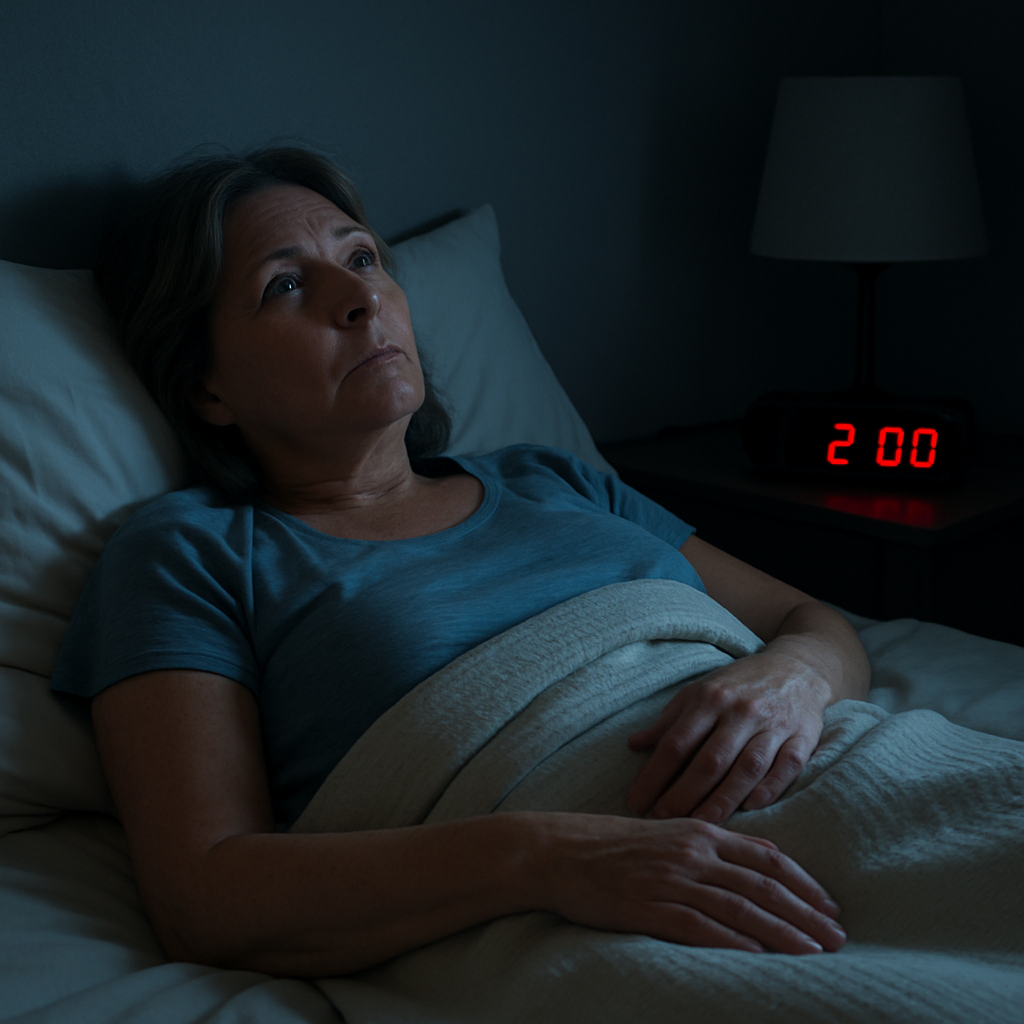
For millions with neuropathy, nighttime is the hardest part of the day.
If you have peripheral neuropathy, you already know the pattern.
During the day, it's manageable. Uncomfortable, yes. But manageable. You move around, you stay busy, you get through it.
Then evening comes.
You sit down. You try to relax. And somewhere around 9 or 10 o'clock, the burning starts to climb. By the time you're ready for sleep, your feet are on fire — tingling, aching, buzzing — when all you want is for them to go quiet.
You've probably assumed this means your neuropathy is simply getting worse. Or that nighttime is just harder because there's less distraction from the pain.
The reason your pain spikes at night isn't your nerves misfiring more. It's a measurable physical change happening in your feet — one that starts the moment you stop moving.
Understanding this one thing changes everything about how you approach nighttime neuropathy. And once you understand it, the solution becomes almost obvious.
Why Your Feet Turn Against You at Night
Here's what's actually happening.
When you're on your feet during the day — even just walking from room to room — your leg muscles are constantly contracting and releasing. Every contraction squeezes the veins in your legs, physically pushing blood back toward your heart and pulling fresh, oxygen-rich blood down into your feet.
This is called the muscle pump. It's one of the body's main mechanisms for keeping your feet nourished throughout the day.
The moment you sit down and stop moving for any extended period — and especially when you lie down at night — that pump shuts off.

The muscle pump that keeps your feet nourished stops the moment you stop moving.
For people with healthy nerves, this isn't a problem. The drop in circulation is minor and temporary.
But for someone with peripheral neuropathy — especially diabetic neuropathy — the nerves in the feet are already damaged and already running on reduced circulation. When the muscle pump stops, and what little blood flow they were getting drops further, those nerves don't have enough of what they need to stay quiet.
Damaged nerves in an environment of poor circulation don't go silent at night. They get louder. The burning, tingling, and electric sensations that were a 5 out of 10 during the day become an 8 or 9 at night — not because your neuropathy is worsening, but because the floor just dropped out from under your circulation.
— Peripheral Health DigestThis is also why your medications often seem less effective at night. Gabapentin, Lyrica, duloxetine — these drugs work by suppressing the pain signal. They don't address circulation. So even when they're doing their job, the underlying problem continues.
The Cycle That Makes Everything Worse
Here's where it compounds.
Sleep is when your body repairs itself. It's when nerve fibers do whatever slow, modest regeneration they're still capable of. When neuropathy steals your sleep, it doesn't just cost you rest — it costs you your body's only real recovery window.
And sleep deprivation amplifies pain. This is measurable and documented. After a week of broken nights, pain receptors become more sensitive. The threshold at which your nervous system registers pain drops. The neuropathy that was manageable becomes harder to manage. Which makes sleep harder. Which makes pain worse.
The good news: the loop has a weak point. And it's not your medication.
What Actually Addresses the Problem
If the problem is the muscle pump shutting down at night, the solution is finding a way to keep it running — or restart it — at exactly the right moment.
This is where Electrical Muscle Stimulation (EMS) comes in. Not as a pain blocker like TENS — as a circulation tool.
When low-frequency electrical pulses are delivered through the soles of the feet, the muscles in the feet and lower legs contract rhythmically — exactly as they do when you walk. The calf muscles squeeze. Blood moves. Fresh, oxygenated blood flows back into your feet.
It's the muscle pump, restarted, without taking a single step.
- Physically moves blood into the feet by contracting the calf and foot muscles
- Activates sensory nerve fibers that compete with and partially block pain signals
- No systemic side effects — no grogginess, no brain fog, no interactions with medication
- Works sitting in your chair or on the edge of your bed — no mobility required
- Documented in peer-reviewed research on peripheral vascular function
It's not just whether you use EMS therapy — it's when. Twenty minutes before bed means you go to sleep with circulation actively flowing through your feet. That's the window your nerves need most. That's when it changes everything.

Most things you've tried for neuropathy work by dulling the pain. Medication turns down the volume. Creams numb the surface. TENS units interrupt the signal.
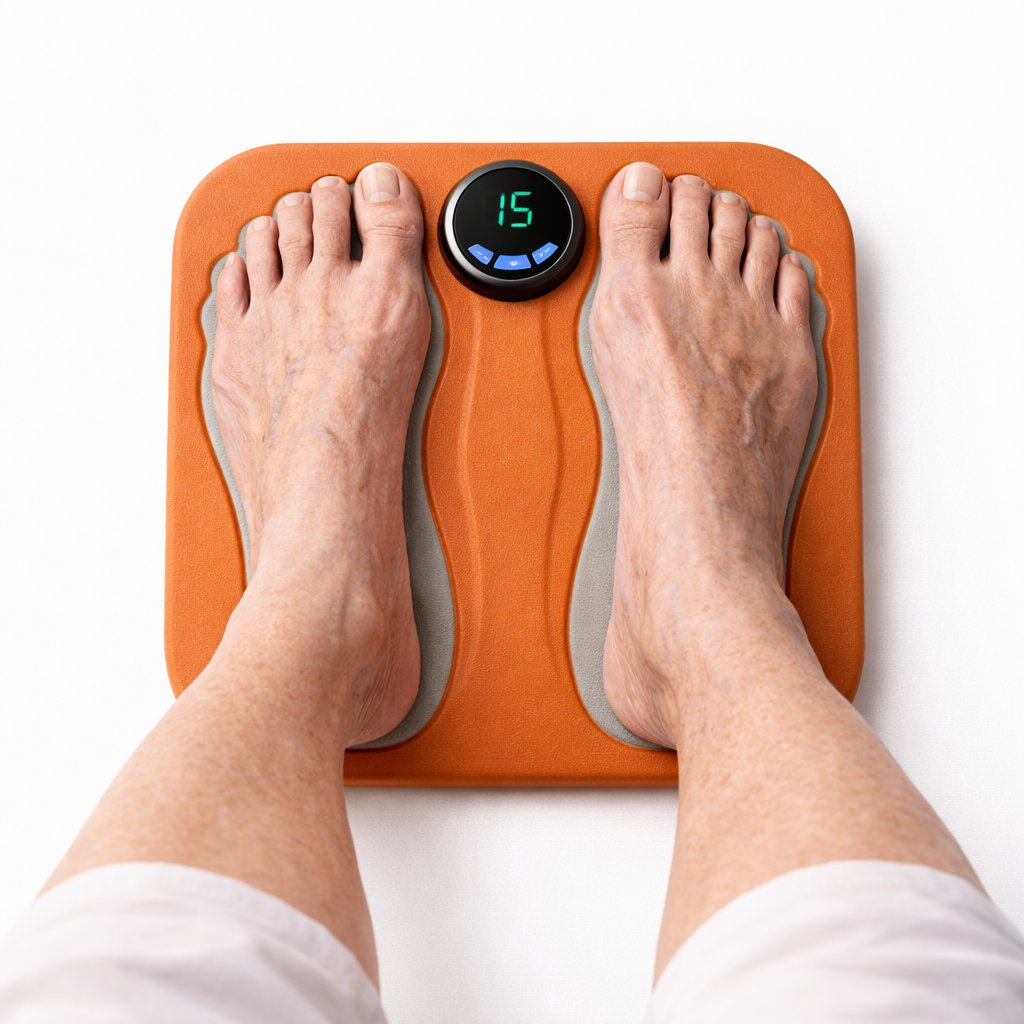
The PulsePad does something none of those can: it physically moves blood back into your feet.
Rest your bare feet on the mat. Press a button. Within seconds, low-frequency electrical pulses travel through the soles of your feet — causing your foot and calf muscles to contract rhythmically, exactly the way they do when you walk. Blood pumps through. Nerves get nourished. After 20 minutes, it shuts off automatically.
You go to bed with circulation flowing through your feet at the exact moment it would otherwise stop. That's the difference. That's why it works when everything else hasn't.
- 15 intensity levels — start as gently as you need, increase at your own pace
- Remote control included — adjust from your chair without bending down
- Auto shuts off at 20 minutes — nothing to set, nothing to remember
- No sticky pads, no app, no Bluetooth — feet on mat, press button, done
- One-time purchase — no subscription, no replacement parts, ever
Why You Don't Need to Spend $300
You've probably seen Revitive — the most heavily marketed EMS foot device — priced between $250 and $400. You may have seen the ReBuilder, which some clinics sell for over $1,000.
Here's what nobody in this space will tell you directly: there are no published head-to-head studies comparing these devices. The mechanism is the same. A low-frequency electrical pulse contracts the same muscle fibers regardless of the device delivering it.
| Feature | Revitive | PulsePad |
|---|---|---|
| EMS Technology | ✓ | ✓ |
| Remote Control | ✗ | ✓ |
| No Sticky Pads | ✓ | ✓ |
| 90-Day Guarantee | ✗ | ✓ |
| Price | $250–$400 | $84.99 |
Revitive spends heavily on television infomercials. You pay for that in the price. The PulsePad uses the same core EMS technology, skips the TV budget, and passes the difference to you.
What to Realistically Expect
We're going to be direct with you, because you deserve that.
The PulsePad is not a cure for neuropathy. No device is. Peripheral neuropathy involves real structural damage to nerve fibers that EMS does not reverse. If you're expecting to wake up with completely normal feet, this isn't right for you.
What EMS addresses is the environment your nerves are living in at night. It addresses the circulation crash that makes already-damaged nerves scream at the exact moment you're trying to sleep.
- First session: Feet feel lighter and less tense immediately after 20 minutes. Most people use it again the next evening without needing to convince themselves.
- Weeks 1–2: Fewer middle-of-the-night wake-ups. Feet that feel calmer at bedtime. The ability to fall back asleep more easily when you do wake.
- Weeks 4–10: Some users notice improvements beyond sleep — reduced daytime discomfort, legs that feel less heavy in the afternoon, a sense that circulation has returned to feet that had gone quiet.
What People With Neuropathy Are Saying
Everything Included — One-Time Price
Everything You're Wondering
How is this different from a TENS unit?
TENS blocks pain signals — it's a pain suppressor. EMS causes muscle contractions that physically move blood through your feet. They're related but meaningfully different. Many people who got no benefit from TENS find real results with EMS because the mechanism targets circulation, not just pain signals. And with the PulsePad, there are no sticky pads — just bare feet on the mat.
Will it hurt? My feet are very sensitive.
The PulsePad has 15 intensity levels for exactly this reason. At the lowest settings you'll feel barely a tingle. You control intensity with the included remote from your chair, at your own pace. Most people describe the sensation as strange for the first minute, then surprisingly comfortable. Start at level 1 and increase only when ready.
Does it work for diabetic neuropathy specifically?
Diabetic peripheral neuropathy is the primary condition the PulsePad was designed to help with. The circulation problems EMS addresses — sluggish blood flow due to vascular damage and reduced mobility — are especially common in people with diabetes. It won't reverse nerve damage, but for many people with diabetic neuropathy, addressing the nighttime circulation problem meaningfully changes their sleep.
I take gabapentin. Can I use both?
EMS foot stimulation has no known interactions with neuropathy medications including gabapentin, Lyrica, or duloxetine. Many users use it alongside their existing prescriptions. It addresses the circulation component that medication structurally cannot. As always, speak with your doctor before changing any medication routine.
Are there people who shouldn't use it?
Do not use if you have a pacemaker or implanted electronic device, an active deep vein thrombosis, or are pregnant. These are important and we're telling you clearly before you order. For everyone else, EMS foot stimulation has a strong general safety profile and is widely used.
How does the 90-day guarantee actually work?
Email support@nerverelief.store within 90 days. Tell us it didn't work — no explanation required. We send a prepaid return label. Drop it at any UPS or USPS. Full refund within 3–5 business days. No restocking fees. No forms. No runaround. We mean it.
This Is Worth 90 Days to Find Out
Best case: you sleep through the night.